
“What Is Prompt Engineering? The Only Guide You Need in 2026”
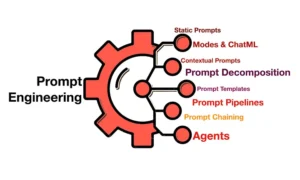
I Used AI Wrong for Months — Here’s What Changed Everything
The first time I used ChatGPT, I typed something like “write me a blog post about digital marketing” and hit enter. What came back was… fine. Technically correct. But it felt like something written by someone who had never actually done digital marketing. Bland. Predictable. Useless.
I copy-pasted it anyway, changed a few words, and moved on.
This went on for weeks. Every time I used AI, I’d get something mediocre and just accept it. I genuinely thought this was the limit of what these tools could do.
Then someone in a Facebook group mentioned the term “prompt engineering.” I had no idea what it meant, so I looked it up — and honestly, it felt a bit overhyped at first. Just writing better instructions? That’s a skill now?
But I tried it. I actually sat down and rewrote the same request with more detail, a specific role, a clear format, and some context. The difference in output was embarrassing. Same tool, same model — but the result looked like it was written by an actual expert.
That’s when it clicked for me. The problem was never the AI. It was how I was talking to it.
If you’ve ever felt like AI tools are overrated or not living up to the hype — I promise you, this guide will change your mind.
What Is Prompt Engineering, Actually?
Okay so let’s clear this up because there’s a lot of confusing definitions floating around online.
A prompt is simply whatever you type into an AI tool. That’s it. Whether it’s a question, an instruction, or a full paragraph of context — it’s a prompt.
Prompt engineering is the skill of writing those prompts in a way that consistently gets you good, useful, accurate results.
Think of it like giving instructions to a very smart intern who just joined your team. This intern is incredibly capable — they’ve read more books, articles, and research papers than any human ever could. But they know nothing about you, your business, your audience, or your preferences. If you say “handle this” — they’ll do something random. But if you say “write a professional email to a client explaining a one-week delay, keep the tone apologetic but confident, and don’t mention the actual reason” — suddenly they nail it.
That’s what prompt engineering is. You’re not learning to code. You’re learning to communicate with AI in a way that it actually understands.
And in 2026, that skill is genuinely worth having.
Why Is Everyone Suddenly Talking About This?
Because AI is everywhere now — and most people are using it badly.
Here’s the honest reality: two people can use the exact same AI tool and get completely different results. One person types a vague question, gets a generic answer, concludes AI is useless, and moves on. Another person writes a structured, specific prompt and gets something that would have taken hours to produce manually. Both used the same tool. One just knew how to talk to it.
The gap between those two people is prompt engineering.
And this gap matters more than ever right now. AI spending worldwide is projected to hit $2.52 trillion in 2026. More than half of small businesses are already using generative AI in some form. Every industry — marketing, education, healthcare, finance, customer service — is integrating AI tools into daily workflows.
The people who understand how to get real output from these tools are going to have a serious edge over those who don’t. This isn’t a distant future thing. It’s happening right now, in job descriptions, in freelance projects, in business decisions.
Learning prompt engineering today is like learning Google search properly back in 2005. Most people were just typing random words. A few people understood how search actually worked — and those people found things everyone else couldn’t. Same idea here.
How Does It Actually Work?
You don’t need to understand machine learning at a deep level to get good at prompt engineering. But it helps to have a basic mental model of what’s happening when you send a prompt.
AI language models — like ChatGPT, Claude, or Gemini — don’t “think” the way humans do. They predict. They’ve been trained on enormous amounts of text, and when you give them a prompt, they predict what the most useful, accurate, relevant response would be based on the patterns in that training data and the context you provide.
This means the quality of your output is directly tied to the quality of your input. The more context, clarity, and structure you give, the better the prediction. The vaguer you are, the more the model has to guess — and guesses are rarely what you actually wanted.
A good prompt usually has a few key elements:
Role — Who should the AI be? An expert copywriter? A financial advisor? A casual friend explaining something simply? Defining a role immediately shifts the tone and depth of the response.
Task — What exactly do you want? Be specific. “Write a caption” is too vague. “Write three Instagram captions for a modest fashion brand targeting women aged 20-35, using an empowering tone with a soft call to action” is a task.
Context — What does the AI need to know to do this properly? Your audience, your brand, the platform, the goal — whatever is relevant, put it in.
Format — Do you want a list? Bullet points? A table? A specific word count? Tell it. Otherwise you’ll get whatever format the model defaults to.
Tone — Conversational, professional, funny, direct? Don’t leave this to chance.
None of these are complicated. You’re basically just answering the questions a smart assistant would ask before starting work. Once you get into this habit, good prompts start coming naturally.
The Main Techniques — Explained Simply
There are a few core techniques that actually move the needle. I’ll explain each one the way I wish someone had explained them to me.
Zero-Shot Prompting
This is what most beginners do without realizing it has a name. You ask the AI something directly, no examples, no setup — just the question or instruction.
Example: “Translate this sentence into formal English: ‘gonna do it later'”
It works fine for simple tasks. The problem is that for anything nuanced or specialized, the model is guessing at what “good” looks like for your specific case. Sometimes it gets it right. Often it doesn’t quite hit what you had in mind.
Few-Shot Prompting
Here you give the AI a few examples of what you want before making your actual request. You’re basically showing it the pattern, so it understands your expectations without you having to explain everything in words.
Example: “Rewrite these sentences in a casual, friendly tone: Original: ‘Your payment has been received.’ → Casual: ‘Got your payment — thanks!’ Original: ‘Please find attached the requested document.’ → Casual: ‘Here’s that file you needed!’ Original: ‘We regret to inform you of a delay.’ → Casual: ___”
The model now knows exactly what “casual and friendly” means in your world — not just in general. This is incredibly useful for brand voice, content formatting, or any task where consistency matters.
Chain-of-Thought Prompting
This one sounds fancy but it’s stupidly simple. You just ask the AI to think through the problem step by step before giving an answer.
The magic phrase? “Think step by step.”
Example without it: “If a product costs Rs. 850 with a 15% discount, what’s the final price?” The model might just spit out a number. Could be right, could be wrong.
Example with it: “If a product costs Rs. 850 with a 15% discount, what’s the final price? Think step by step.” Now it walks through: 15% of 850 = 127.5, so 850 − 127.5 = 722.5. You can actually see the reasoning, catch errors, and trust the answer.
For anything involving logic, math, planning, or decisions — this technique makes a noticeable difference.
Role Prompting
One of the most powerful and most underused techniques. You assign the AI a specific identity, and it adjusts its knowledge, vocabulary, and tone accordingly.
Weak: “Review my LinkedIn bio.”
Strong: “You are a senior recruiter with 10 years of experience in digital marketing hiring. Review my LinkedIn bio and tell me what’s working, what’s weak, and give me a rewritten version that would actually make you want to click ‘connect’.”
The second version gets a response that feels like it came from someone who actually knows the industry. Because as far as the AI is concerned — it does.
Prompt Chaining
Instead of asking for everything in one massive prompt, you break the task into steps. Each response feeds into the next prompt.
So if you want a full blog post, you don’t just ask for a 2000-word article. You first ask for an outline.You have to ask it to expand section one. Then section two. Now you ask for a strong introduction. Each step gives you more control and better output than trying to do it all at once.
This is how people who actually use AI for professional work operate. Not one giant prompt — a conversation.
Who Is This Skill Actually For?
Honestly? Everyone who uses AI tools. But let me be more specific about who sees the biggest impact immediately.
Freelancers — whether you do content writing, social media, graphic design briefs, or anything client-facing, prompt engineering directly cuts your working time. A project that used to take three hours now takes forty-five minutes if you know how to brief AI properly.
Bloggers and content creators — article ideas, outlines, repurposing old content, writing in different formats for different platforms — all of this becomes significantly faster. Not because AI writes your content for you, but because the back-and-forth editing phase shrinks dramatically when your first draft is already close to what you wanted.
Digital marketers — ad copies, email subject line variations, caption testing, product descriptions — these are tasks that repeat constantly. Getting good outputs fast from AI is a genuine competitive advantage when your clients expect quick turnarounds.
Students — using AI to understand complex topics, get explanations in simpler language, quiz yourself, or prepare for exams becomes much more useful once you know how to frame your prompts properly.
Small business owners — you can replace a surprising amount of outsourced work once you know how to direct AI properly. Customer service scripts, FAQ pages, supplier emails, social content — a lot of this is doable without hiring someone if your prompts are right.
No coding needed. No technical background required. The barrier to entry here is genuinely low — what separates good from bad is mostly attention and practice.
Can You Actually Make Money From This?
Yes — and the numbers are not small.
Prompt engineering has turned into a real career path. In the US, mid-level prompt engineers are earning between $110,000 and $130,000 a year. Senior roles push well past $170,000. At top AI labs, total compensation including equity crosses $500,000.
Now, those are US salaries — but remote work in AI is very real.Freelancers are already picking up AI-related projects on Upwork, Fiverr, and direct client platforms. If you can demonstrate that you know how to build AI workflows, write effective prompts for specific use cases, and deliver consistent results — that’s a billable skill globally.
Even if you never take a formal “prompt engineer” job, the skill pays off indirectly. You work faster. Your outputs are better. You take on more projects, handle more clients, or simply spend less time on tasks you used to dread.
The window to get ahead of the curve on this is still open. Not for long — but right now, people who genuinely understand prompt engineering are still rare enough to stand out.
How to Actually Start Learning It
Forget paid courses for now. Here’s the most effective way to build this skill:
Use AI every single day and experiment intentionally. Take any task you’re already doing and try three different ways of prompting it. See which version gets you the best result and ask yourself why. This trial-and-error learning compounds fast.
Study the structure of good prompts. When you see an AI output that impresses you — whether in a Twitter thread, a Reddit post, or someone’s YouTube video — look backwards. What was the prompt that produced that? Start a personal collection of prompts that work well for your use cases.
Follow AI communities. Reddit’s r/PromptEngineering, X (formerly Twitter), and various Discord servers are where working knowledge lives. Not textbook theory — actual people sharing what’s working right now, what’s changed after model updates, what tricks are worth knowing.
Free structured resources: Google’s Prompt Engineering course, Anthropic’s documentation at docs.anthropic.com, and Coursera’s free tier all have solid material. Start with Anthropic’s docs if you use Claude — their guidance is surprisingly practical.
Document your experiments. Even a simple Google Doc where you track prompt → output → what worked = a portfolio. This matters if you ever want to pitch this skill to clients or employers.
Pros and Cons — Let’s Be Real
What’s genuinely great about it:
- Zero technical barrier to entry — anyone can start today
- Immediately useful in real work, not just theoretical
- Applicable across every AI tool you’ll ever use
- Transferable globally — your prompting skills work whether you’re using ChatGPT, Claude, or whatever model comes out next year
- Compounds quickly — a few weeks of deliberate practice makes a noticeable difference
What’s actually annoying about it:
- AI models get updated and sometimes your best prompts stop working as well as they did before
- Outputs aren’t always consistent — same prompt, different run, slightly different result
- Getting genuinely good takes real time and practice — there’s no shortcut that actually works
- Advanced roles do require some technical skills eventually, especially Python and API basics
- Job titles are all over the place right now — “prompt engineer,” “AI specialist,” “LLM ops” — the market hasn’t standardized yet, which makes career navigation confusing
Final Thoughts — Is It Worth Learning?
Short answer: yes, without question.
Longer answer: prompt engineering is one of those rare skills where the effort-to-payoff ratio is genuinely good. You’re not learning something abstract that might be useful someday. You’re learning something that makes you better at tools you’re probably already using today.
The AI revolution isn’t coming — it’s already here. And right now, most people using these tools are doing it at maybe 20% of their potential. They type vague questions, get mediocre answers, and either accept them or give up. The people who take the time to actually learn how this works are running laps around them.
You don’t have to become a professional prompt engineer. And no need to quit your job or take an expensive course. You just need to stop treating AI like a search engine and start treating it like a capable teammate who needs proper briefing.
Start with role prompting. Try it on your next ChatGPT or Claude session. Tell the AI who it is, what you need, who the audience is, and what format you want. See what comes back.
That’s all it takes to begin. Everything else builds from there.